Source Eco Friendly Custom Plush Toy for Gifts, Promos, Retail
Source eco friendly custom plush toy options from 27 verified listings. Compare features like soft comfort, CE and ASTM certifications, and OEM capabilities. Evaluate pricing, MOQs, and production times to find the right supplier for your bulk orders; compare the available evidence and request quotations based on your requirements.
Key considerations
Products List




Comprehensive Sourcing Guide
Eco Friendly Custom Plush Toy Sourcing Guide
Procuring eco-friendly custom plush toys requires balancing sustainable material sourcing with the specific customization needs of modern brands. Buyers must verify that suppliers utilize organic cotton, recycled polyester, or other certified eco-friendly fillings while maintaining the soft, comfortable texture expected in the market. The observed product range includes items labeled as hand-made or machine-produced, indicating that production methods vary significantly by vendor. Sourcing strategies should prioritize factories that explicitly document their material origins and processing techniques to ensure the final product aligns with environmental claims.
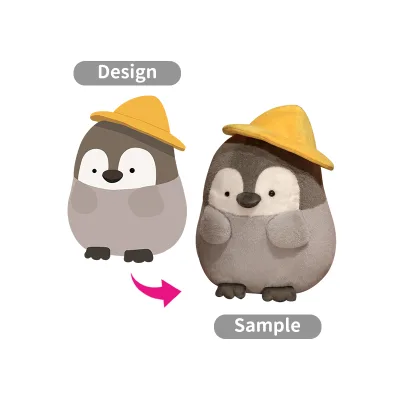
Commercial viability depends on understanding the diverse customization options available, such as custom logos, specific animal types like teddy bears, and tailored packaging solutions. The market data shows a wide range of MOQs from single units to thousands, allowing flexibility for both promotional campaigns and large-scale retail orders. Buyers should focus on suppliers who offer OEM and ODM services, as these capabilities are essential for creating unique products that stand out in a crowded marketplace. Evaluating the sample time of 3-7 working days is crucial for maintaining project timelines while ensuring the design intent is accurately translated into the physical prototype.
Product Scope and Observed Listing Signals
The product scope for custom plush toys encompasses a variety of styles, including sitting animals and generic cute animal figures suitable for different age groups ranging from infants to older children. Listings indicate that these items are frequently marketed as gifts, promotional tools, or baby toys, with specific attributes like softness and comfort being primary selling points. The observed data highlights that models can be sourced with custom dimensions, though standard sizes like 11-30cm in height are common. Buyers must carefully review product descriptions to confirm whether the item is intended for specific age brackets, as safety requirements differ significantly between toys for infants and those for older children.
Listing signals reveal that packaging varies from individual boxes to bulk cartons containing 30-40 pieces, which impacts logistics and storage costs. Some suppliers offer customized labels or hang tags, providing an additional avenue for brand reinforcement on the final product. The diversity in product models, from specific animal types to generic soft toys, suggests that buyers should define their exact requirements early in the sourcing process. It is important to note that while some listings mention "eco-friendly" concepts, the specific material composition must be verified against the supplier's actual production capabilities rather than assumed from general marketing terms.
Technical Specifications to Verify
Technical verification begins with confirming the production method, as listings show a mix of hand-made and machine-produced items that affect consistency and texture. Buyers should explicitly request details on the plush length and overall dimensions, as specifications range from short plush toys to larger figures, with some products defined by standard sizes while others are fully custom. The weight of the product is often listed as customizable, meaning the density of the filling and the thickness of the fabric will vary based on the order specifications. Ensuring that the technical attributes match the intended use case is critical for maintaining product quality and customer satisfaction.
Further technical checks involve validating the washing instructions and durability of the materials used in construction. Most observed listings recommend hand washing, which is a key consideration for end-users and affects the perceived value of the toy. The modeling source, whether derived from specific animals or custom designs, dictates the complexity of the manufacturing process and the accuracy of the final shape. Buyers must ensure that the supplier can consistently reproduce the desired style, whether it is a sitting animal or a specific character, without compromising the structural integrity of the plush toy during mass production.
Compliance and Safety Documentation
Safety compliance is paramount when sourcing plush toys, particularly given the diverse age ranges from 0+ to over 8 years. The observed listings frequently cite certifications such as CE, EN71, ASTM, CPSIA, and REACH, which are essential for market access in Europe and North America. Buyers must verify that the specific batch of products carries valid test reports corresponding to these standards, as compliance is not automatic across all supplier offerings. The presence of BSCI and ISO9001 certificates indicates a commitment to social responsibility and quality management, but these should be cross-referenced with current audit reports to ensure they are active and relevant.
Documentation requirements extend beyond basic safety to include specific test results for flammability, chemical content, and mechanical hazards. The listed standards like ASTM and EN71 provide a framework for testing, but buyers should request the actual test data to confirm that the specific materials used meet these rigorous criteria. For eco-friendly claims, verifying that the materials do not contain harmful substances is equally important, even if specific eco-certifications like OEKO-TEX are not explicitly listed in the primary data. Ensuring that all safety documentation is up-to-date and applicable to the specific product model prevents costly recalls and regulatory issues in the destination market.
Cost Drivers and Commercial Terms
Cost drivers in this category are heavily influenced by the level of customization, including the complexity of the design, the choice of materials, and the volume of the order. The observed price range of 0.5 to 9 USD reflects the variability between simple promotional items and more complex, high-quality plush toys with custom features. Buyers should anticipate that custom logos, unique packaging, and specific animal designs will increase the unit cost compared to standard stock items. Understanding the relationship between order quantity and price is essential, as the MOQ ranges from 1 to 1000 units, allowing for different budget strategies depending on the project scale.
Commercial terms regarding lead times and production schedules must be clearly defined to avoid delays. The observed production time is approximately 20 days, though this can vary based on the order quantity and the complexity of the customization. Sample times of 3-7 working days are standard, but buyers should confirm if these timelines include shipping or are for production only. Negotiating clear terms for payment, shipping, and quality acceptance is vital, especially when dealing with custom orders where the final product must meet specific design expectations before mass production begins.
Supplier Qualification and Quality Control
Supplier qualification requires a thorough assessment of their manufacturing capabilities, including their ability to handle both hand-made and machine-produced items. Buyers should verify the supplier's location, as origins like China and Shanghai are noted, and assess their logistical capacity to handle international shipping and customs clearance. The presence of OEM and ODM capabilities is a strong indicator of a supplier's flexibility and technical expertise, but it is essential to confirm their track record with similar custom projects. A supplier's ability to manage the entire process from design to final packing is crucial for ensuring a smooth procurement experience.
Quality control measures must be established early in the relationship to ensure consistency across the production run. Buyers should implement a clear inspection protocol that covers the physical attributes of the plush toy, such as stitching quality, softness, and the accuracy of the custom logo application. Given that the product is often used as a gift or for children, the finish and safety of the final item are non-negotiable. Regular communication with the supplier during the production phase and conducting pre-shipment inspections can help identify and rectify any issues before the goods leave the factory.
Long-Term Procurement Checks
Long-term procurement success relies on maintaining a consistent supply chain that can adapt to changing market demands and regulatory updates. Buyers should establish a schedule for periodic supplier audits to ensure that certifications like BSCI and ISO9001 remain valid and that production standards are consistently met. Monitoring the supplier's ability to deliver on time and maintain quality over multiple orders is essential for building a reliable partnership. Regular reviews of the product specifications and materials used can help ensure that the eco-friendly claims remain accurate and compliant with evolving environmental standards.
Continuous improvement in the product line should be driven by feedback from end-users and market trends. Buyers should encourage suppliers to innovate with new materials or designs that enhance the sustainability and appeal of the plush toys. Keeping abreast of changes in safety standards and certification requirements is necessary to avoid disruptions in the supply chain. By fostering a collaborative relationship with the supplier, buyers can ensure that their custom plush toy offerings remain competitive, safe, and aligned with the values of their target audience over the long term.
FAQs
Can I customize the logo on eco friendly custom plush toy orders?
Yes, customers logo customization is available for these plush toys. You can provide your own design for the label or hang tag, which can also be customized to match your brand identity. This OEM and ODM service allows for full branding integration on the soft comfortable gift items.
What certifications do these custom plush toys hold?
These products hold CE, EN71, REACH, ASTM, CPSIA, and BSCI certifications, along with ISO9001 compliance. They undergo ASTM and EN71 testing to ensure safety standards are met. This makes them suitable for global markets requiring strict regulatory compliance for children's toys and promotional gifts.
What is the sample time for custom plush toy orders?
The sample time is typically 3-7 working days. This allows for quick verification of design, material, and customization details before mass production begins. Once samples are approved, the production time is about 20 days, depending on the specific order quantity and complexity of the customization.
What is the MOQ for these eco friendly custom plush toys?
The MOQ ranges from 1 to 1000 units, offering flexibility for various order sizes. This wide range supports both small promotional batches and larger retail orders. Buyers can choose quantities that fit their budget and inventory needs while still accessing customization options and competitive pricing structures.
Where are these custom plush toys manufactured?
These plush toys are manufactured in China, with specific production originating from Shanghai. The manufacturing process includes both hand-made and machine production techniques depending on the specific product model. This location offers established supply chains for raw materials and efficient logistics for global distribution.
What age group are these soft plush toys designed for?
These toys are designed for various age groups, including 0+, 3-8 years, and over 8 years. They feature soft, comfortable materials suitable for cuddling and play. The sitting animal style and short plush length make them appropriate for children and collectors alike, ensuring broad appeal.